When people think about oral health, they often focus on preventing cavities, keeping their teeth clean, or improving their smile. It's less common to think about how the health of your gums may influence other parts of your body. Yet growing evidence suggests that oral health and overall health are more closely connected than many people realize.
One area that has received increasing attention from researchers is the relationship between gum disease and high blood pressure (hypertension). While scientists are still working to better understand the biological mechanisms involved, multiple studies have found an association between these two conditions. Organizations such as the American Academy for Oral Systemic Health (AAOSH) and the European Federation of Periodontology (EFP) continue to highlight the importance of considering oral health as part of a person's overall well-being.
Understanding this connection doesn't just help explain why healthy gums matter. It also reinforces the value of prevention, early diagnosis, and regular dental care as part of maintaining your long-term health.
· Gum disease is a chronic infection that affects the tissues supporting your teeth.
· Research suggests an association between periodontal disease and high blood pressure.
· The relationship appears to work in both directions: gum disease may contribute to systemic inflammation, while high blood pressure may affect gum health.
· Healthy gums are an important part of maintaining your overall health.
Gum disease, also known as periodontal disease, is a bacterial infection that affects the gums and the tissues supporting your teeth. It develops gradually and often progresses with very few noticeable symptoms, especially in its early stages.
The condition usually begins as gingivitis, the mildest form of gum disease. At this stage, plaque builds up around the gumline. Plaque is a sticky film of bacteria that naturally forms on the teeth every day. If it isn't removed through brushing, flossing, and professional cleanings, the bacteria begin to irritate the gums, triggering inflammation.
The good news is that gingivitis is reversible with early treatment. Without treatment, however, gingivitis can progress to periodontitis, a more advanced stage of periodontal disease. The infection spreads below the gumline, damaging the connective tissues and the bone that support your teeth. Over time, this may lead to gum recession, bone loss, loose teeth, and eventually tooth loss.
Because gum disease often develops gradually and with little discomfort, many people don't realize they have it until significant damage has already occurred. That's one of the reasons dentists place such a strong emphasis on prevention and early detection.
One of the most common reasons people schedule a dental appointment is because they notice bleeding gums while brushing or flossing.
Although occasional bleeding is often dismissed as brushing too hard, healthy gums should not bleed during your daily oral hygiene routine. In many cases, bleeding is one of the earliest signs of gingivitis, making it an important symptom to pay attention to.
Other common signs of gum disease include:
· Red or swollen gums
· Tender or sensitive gums
· Persistent bad breath
· Gum recession, making teeth appear longer
· Pain when chewing
· Loose or shifting teeth in more advanced cases
Not every symptom appears at the same time, and the signs can vary from person to person. Regular dental examinations allow your dentist to identify early changes in your gum health and recommend treatment before the disease becomes more difficult to manage.
If you've ever wondered, "Why do my gums bleed when I brush my teeth?" or "Why do my gums bleed when I floss?", it's worth scheduling a dental evaluation rather than waiting for the problem to resolve on its own.

Although researchers are still studying exactly how these conditions influence one another, a growing body of evidence continues to support an association between periodontal disease and hypertension.
One of the leading theories behind this connection involves chronic inflammation.
As periodontal bacteria accumulate below the gums, the body's immune system responds by producing inflammatory molecules to fight the infection. This is a normal defense mechanism. However, when gum disease remains untreated, the inflammation can become chronic. Instead of staying confined to the gums, inflammatory molecules and even oral bacteria may enter the bloodstream, where they can influence tissues throughout the body.
According to the American Academy for Oral Systemic Health (AAOSH), this persistent inflammatory response is one of the primary biological mechanisms believed to link periodontal disease with systemic conditions, including hypertension. In its article The Oral-Systemic Impact of Hypertension: Pathophysiology, Periodontal Consequences, and Long-Term Dental Effects, the organization explains that chronic periodontal inflammation has been associated with biological changes extending well beyond the mouth, reinforcing the importance of oral health as part of overall health.
This proposed mechanism is also supported by a joint consensus report from the European Federation of Periodontology (EFP) and the World Heart Federation (WHF), published in the Journal of Clinical Periodontology. The report identifies chronic inflammation and endothelial dysfunction, a condition in which the inner lining of blood vessels no longer functions as efficiently as it should, as among the most plausible biological pathways connecting periodontitis and cardiovascular disease. Because healthy blood vessels rely on a properly functioning endothelium to expand and regulate blood flow, endothelial dysfunction may make it more difficult to maintain normal blood pressure.
Drawing on the available epidemiological evidence, the same consensus report concluded that people living with periodontitis are consistently more likely to have hypertension than individuals with healthy gums, even after accounting for shared risk factors such as smoking, diabetes, obesity, and aging. It also highlights evidence suggesting that individuals with severe periodontitis are more likely to experience uncontrolled hypertension, reinforcing the relationship between oral inflammation and cardiovascular health.
It's important to understand that these findings show an association, not definitive proof that gum disease directly causes high blood pressure. However, the growing body of evidence highlights the importance of maintaining healthy gums as part of supporting overall health.
The connection between gum disease and high blood pressure doesn't appear to go in only one direction. Researchers have also been studying how hypertension may influence the health of your gums.
High blood pressure affects blood vessels throughout the body, including those responsible for supplying the gums with oxygen and nutrients. Over time, changes in blood vessel function may reduce the efficiency of blood flow, making it more difficult for gum tissues to receive what they need to stay healthy and repair themselves.
According to the American Academy for Oral Systemic Health (AAOSH), reduced blood flow may contribute to delayed healing and increase the tissues' vulnerability to ongoing inflammation, particularly when periodontal disease is already present.
Medications used to treat high blood pressure can also influence oral health.
Some antihypertensive medications may reduce saliva production, leading to dry mouth (xerostomia). According to the American Dental Association (ADA), saliva plays an essential role in protecting your teeth and gums by washing away bacteria, neutralizing acids, supporting remineralization, and helping maintain a balanced oral environment. When saliva production decreases, plaque can accumulate more easily, increasing the risk of both cavities and gum disease.
Certain calcium channel blockers, a class of medication commonly prescribed to manage hypertension, have also been associated with gingival enlargement, an overgrowth of gum tissue that can make brushing and flossing more difficult. If plaque isn't removed effectively, the risk of periodontal disease may increase. Research has shown that this side effect is influenced not only by the medication itself but also by factors such as existing gum inflammation and oral hygiene, making regular professional dental care especially important for affected patients.
These side effects don't occur in every patient, and they should never be a reason to stop taking prescribed medication. Instead, they highlight the importance of maintaining regular dental visits and communicating any oral health changes with both your dentist and physician. Early identification and preventive care can help manage these effects while allowing you to continue receiving the cardiovascular benefits of your prescribed treatment.
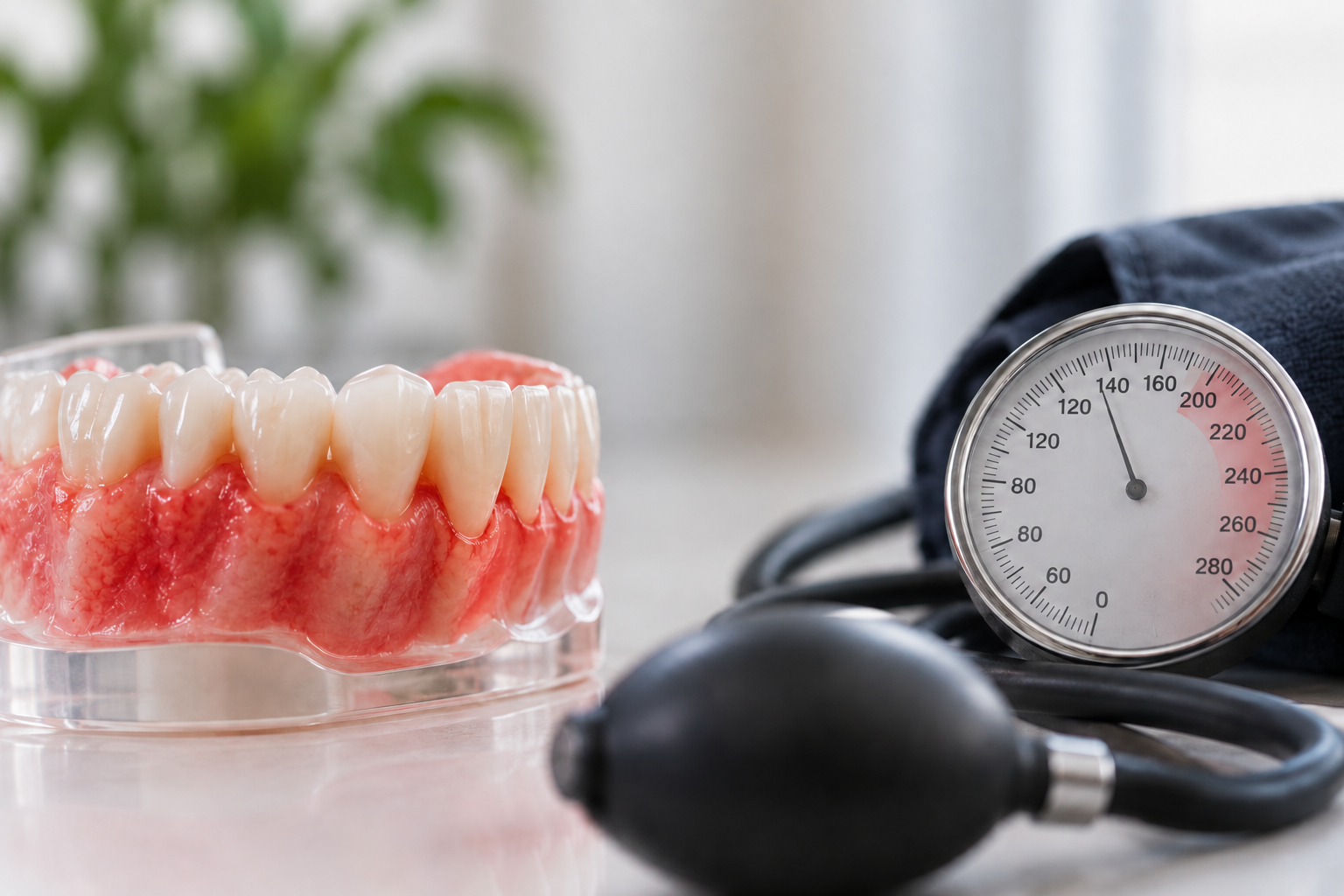
While scientists continue to learn more about the relationship between gum disease and hypertension, the steps you can take to protect your health are well established.
Good daily habits help reduce plaque buildup, lower the risk of gum disease, and support a healthier oral environment.
Here are a few ways to keep your gums healthy:
· Brush your teeth twice a day using proper brushing technique.
· Floss or clean between your teeth every day.
· Schedule regular dental cleanings and examinations.
· Avoid smoking and tobacco products.
· Maintain a balanced diet and limit sugary foods and beverages.
· Work with your physician to manage conditions such as diabetes and high blood pressure.
· Don't ignore symptoms like bleeding gums, persistent bad breath, or gum recession.
Many cases of gum disease begin with mild inflammation that causes little or no discomfort. Regular dental visits allow your dentist to identify early signs of gingivitis before they progress into more advanced periodontal disease.
Prevention remains one of the most effective ways to protect both your oral health and your overall well-being.
At Junction Family Dental Care, we believe great dentistry goes beyond treating individual teeth. Our approach is built around education, empowerment, and support through personalized care because we understand that a healthy smile contributes to a healthier life.
That philosophy is supported by a growing body of scientific research. As organizations like the AAOSH and the European Federation of Periodontology continue to explore the relationship between oral health and systemic health, one message remains consistent: caring for your gums is an important part of caring for your body.
Our team takes the time to understand your oral health, identify concerns early, and create personalized treatment plans that support your long-term oral health. From routine cleanings to periodontal care, every recommendation is focused on helping you maintain healthy gums and a confident smile for years to come.
If you've noticed bleeding gums, persistent bad breath, gum sensitivity, or it's simply time for your routine dental check-up, we're here to support you. Together, we can identify the cause of your symptoms, discuss the most appropriate treatment options, and help you protect your oral health before small concerns become more complex.
Book an appointment with Junction Family Dental Care today and take a proactive step toward a healthier smile and lasting oral health.